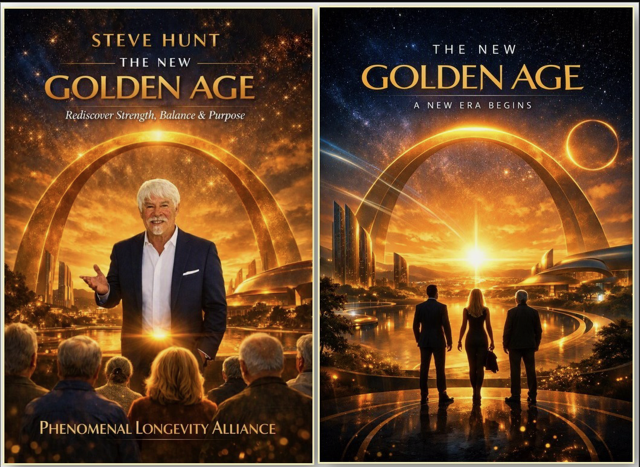
Steven A. Hunt, MBA · Co-Founder & Managing Partner, Phenomenal Longevity Alliance
The New Golden Age is not one book. It is a series, published one volume at a time, and each volume is written the same way: from the questions real people ask about aging, answered in plain language, and graded honestly — Established, Emerging or Early — so the reader always knows the difference between what is proven and what is merely sold.
The series takes its name from a simple claim. For most of history, the years after sixty-five were a slow retreat. The science of the last twenty years says they do not have to be — that aging has named mechanisms, that many of them can be measured, and that some of them move when you act on them. That is not a promise of youth. It is something better: a set of years that can be lived on purpose. That is the new golden age, and this series is a guide to it.
Behind every volume is the Phenomenal Longevity Alliance, a group of physicians, scientists and builders who each answer for a single discipline and none of whom speak outside it. Their model runs through every answer: read your biology first, interpret it with a doctor, act on it, measure whether the numbers moved, and deliver all of it in a room you can actually walk into every week.
This is Volume One, Longevity Workshops for Seniors. It is built on the fifteen questions seniors ask most, gathered at senior-center talks and answered one at a time. The volumes that follow will come from the same place — the question sheets filled out at every talk — so the series grows in the order people actually need it. Each new volume is sent to every reader on the list as it is published.
Nothing in any volume replaces your own physician. It is meant to make you a better patient of the one you have.
The fifteen questions, and where each one stands
Established — settled science, decades of evidence. Emerging — real evidence, still being tested. Early — promising or sold, not yet proven.
01
Why is DNA important to identifying wellness?
Established
02
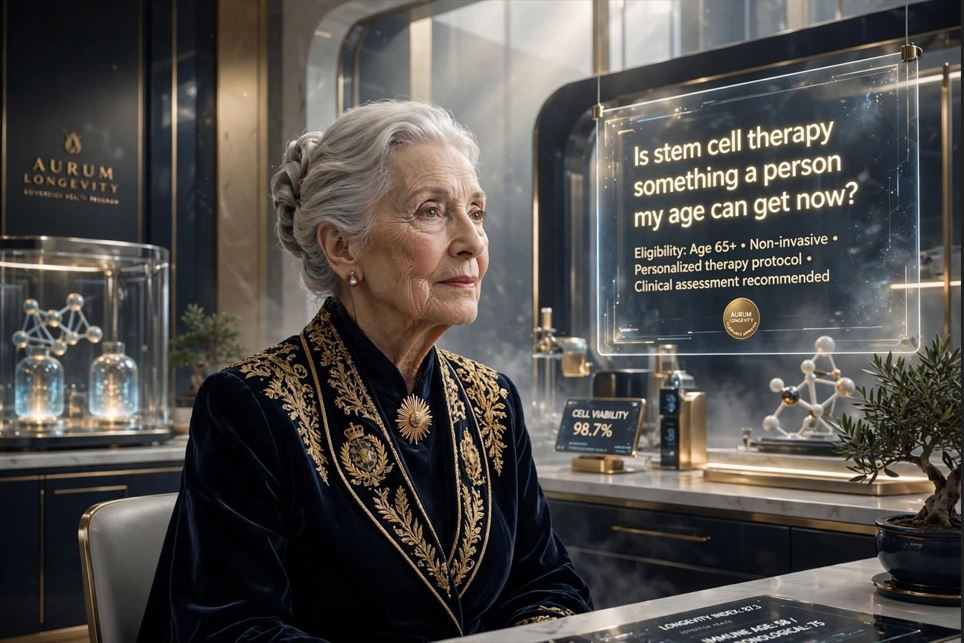
Is stem cell therapy something a person my age can get now?
Emerging
03
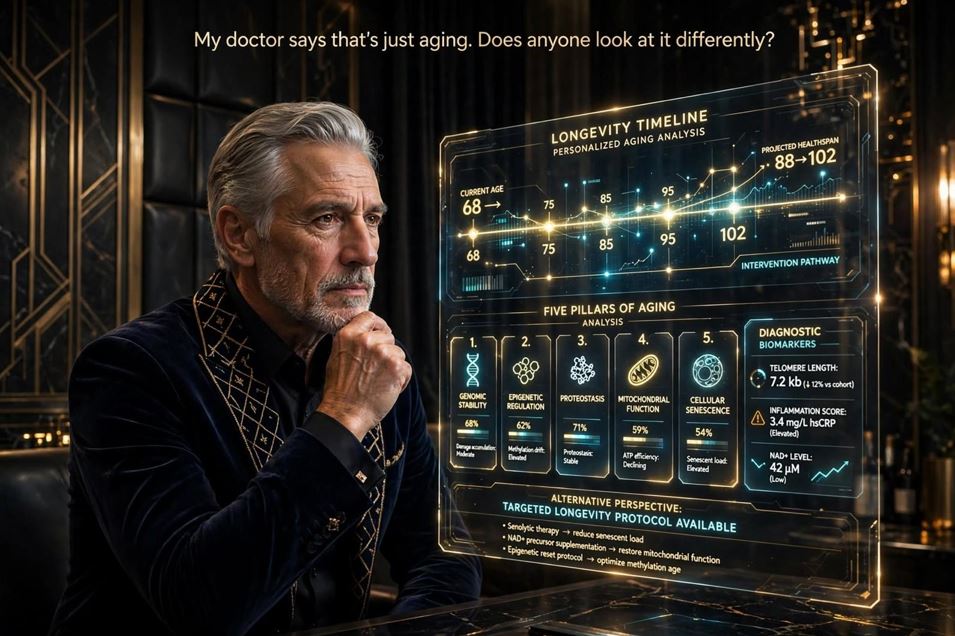
My doctor says “that’s just aging.” Does anyone look at it differently?
Established
04
How does a chiropractor fit into a longevity model?
Emerging
05
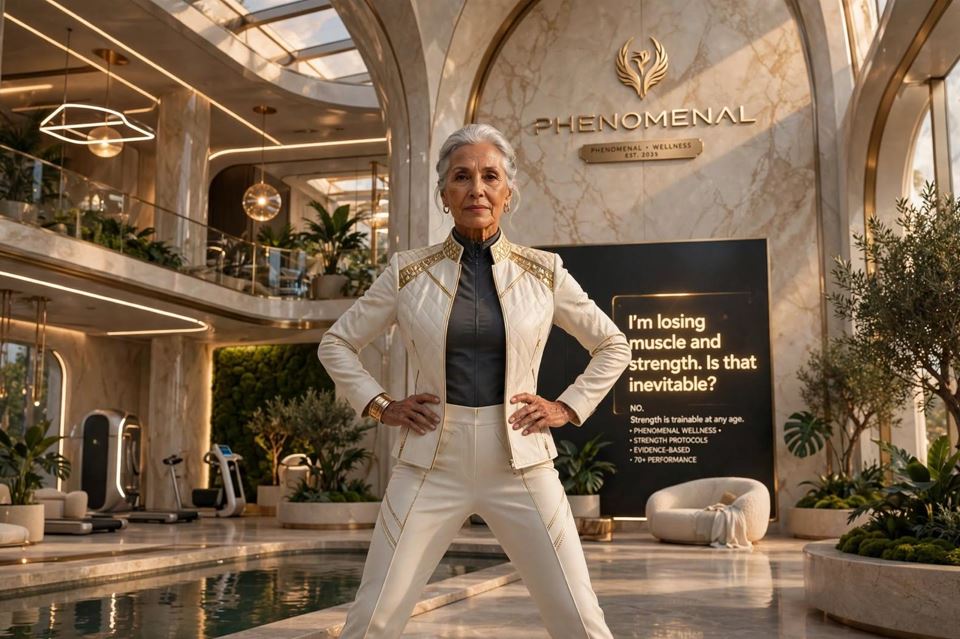
I’m losing muscle and strength. Is that inevitable?
Established
06
What actually prevents falls?
Established
07
Does poor sleep affect my memory?
Established
08
I take seven medications. Is that a problem?
Established
09
Is hearing loss connected to dementia?
Established
10
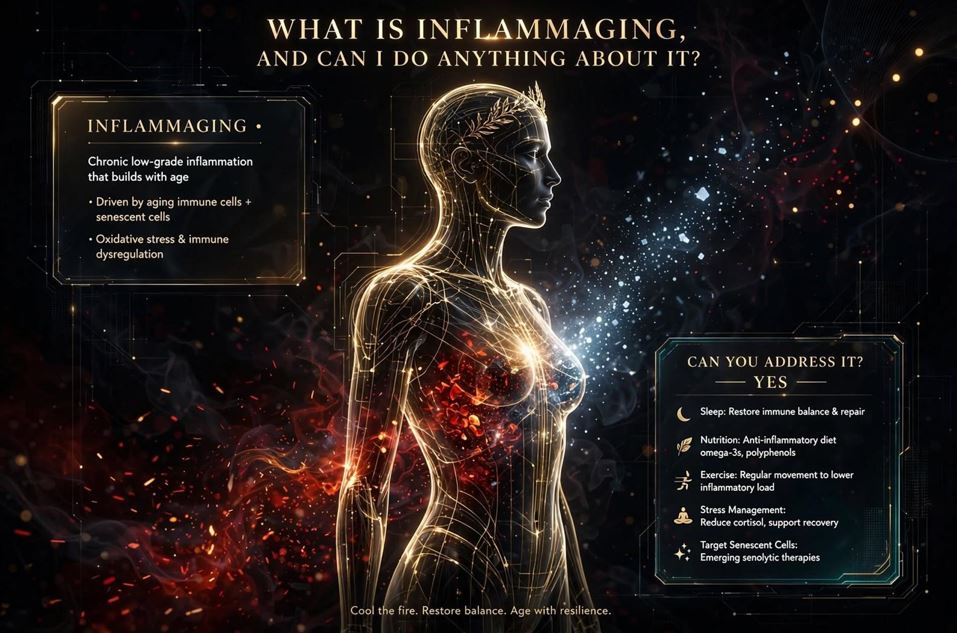
What is “inflammaging,” and can I do anything about it?
Established
11
Can red light therapy help me?
Emerging
12
Can telomeres — the aging clock — be reset?
Early
13
Is there a pill for aging?
Early
14
Does being lonely actually shorten your life?
Established
15
I’m seventy-five. Is it too late to start?
Established
01
Why is DNA important to identifying wellness?
Because two people eating the same food, taking the same supplement, or following the same plan do not get the same result — and part of the reason is written in their genes. Standard dietary guidance was built to prevent disease across whole populations, but there is now substantial evidence that individuals respond very differently to identical diets, and inherited variation is one of the drivers. Single-nucleotide polymorphisms — small one-letter variations that occur roughly every thousand base pairs — are the most common kind of genetic difference, and they can meaningfully change how a person metabolizes nutrients.
What that means in practice: people carrying particular variants in genes such as APOE, FTO and MTHFR show markedly different responses to dietary fat, carbohydrate and folate respectively. Reviews of the field find that the handling of lipids (especially omega-3s), glucose, vitamin A, folate, vitamin D, iron and calcium can all be affected by known variants, which is why the same supplement helps one person and does nothing for another. So a DNA read is the difference between a plan built for the average person and a plan built for you — which is why the Alliance model starts there.
What it rests on, graded honestly
Established — that genetic variants alter how individuals absorb and metabolize specific nutrients (folate/MTHFR, lactose, caffeine, iron are the textbook cases).
Emerging — that acting on those variants improves outcomes. The evidence base is real but thin: a 2024 systematic review on iron-related variants found only 21 qualifying studies, nearly all observational and mostly in Caucasian populations.
Early / contested — consumer DNA diets for weight loss. In the largest randomized test to date, matching people to a low-fat or low-carb diet by genotype produced no significant difference in weight change after twelve weeks, which challenges the predictive value of current genetic panels for that purpose. (That is the DIETFITS trial, JAMA, 2018.)
DNA tells you where your biology is likely to differ from the average — that part is settled.
Turning that into a plan that measurably works is where the science is still being done, which is exactly why the Alliance re-tests on a defined interval rather than trusting the report. It is also why our advisors have a way for you to take action now, with the read as the starting point.
02
Is stem cell therapy something a person my age can get now?
Both — and the distinction is the whole answer. Stem cells are the body’s master cells, the ones that become blood, bone, brain and every organ, and they carry real potential to repair and regenerate tissue. But in the United States, the only stem cell products the FDA has approved are blood-forming cells from cord blood, for a short list of blood-system disorders, with a handful of newer approvals for specific rare diseases; nothing else is approved for general use. Every other stem cell treatment is either inside a clinical trial or being sold outside the rules.
That second category is large. Hundreds, possibly thousands, of clinics offer unproven and unapproved stem cell treatments for everything from sports injuries to neurological disease, and these are not just unapproved but dangerous — in one well-known case three elderly women were blinded by a fat-derived stem cell injection at a Florida clinic. The FDA’s own language is blunt: if you are charged for a stem cell product outside a clinical trial, you are likely being deceived and offered it illegally. Exosome therapy, widely sold, has no approval either. Anyone your age can walk into one of those clinics today. That is not the same as the therapy being ready.
What it rests on, graded honestly
Established — blood-forming stem cell transplants for certain cancers and blood disorders. Decades of use, real survival data.
Emerging — mesenchymal and other stem cell approaches for heart, joint and neurological conditions. Genuine trials are running under FDA oversight, and some have shown benefit, but results are mixed and nothing has cleared the bar for general use.
Early — “stem cell” injections and IV infusions sold at cash clinics for aging, pain or Alzheimer’s. No approval, no trial, documented injuries.
The science is real and the direction is settled — but the approved list is short.
The gap between what is proven and what is sold is where people get hurt. That is why the Alliance grades every claim, and why a cardiologist, not a salesperson, explains stem cells: hear it from Dr. Ernst von Schwarz, MD, PhD, FACC. It is also why our advisors have a way for you to take action now, starting with a read of your own biology rather than an injection.
03
My doctor says “that’s just aging.” Does anyone look at it differently?
Yes — and it is no longer a fringe view. A whole field, geroscience, is built on the finding that aging is the single largest modifiable risk factor for most chronic disease, and that heart disease, diabetes, cancer and dementia are not independent conditions but manifestations of one shared biological process. Scientists have mapped that process into twelve “hallmarks of aging,” and the working hypothesis is that if you slow the underlying process, you delay several diseases at once instead of chasing them one by one.
Two facts show how far this has moved out of the laboratory. The World Health Organization now has a diagnostic code — ICD-11 MG2A — for age-associated decline in intrinsic capacity, which means “just aging” is now something a physician can write down, measure and treat. And the FDA has accepted the TAME trial, the first clinical trial designed to delay aging itself as a multi-disease outcome; it is underway now. Many geroscientists believe the mechanisms of aging are both malleable and treatable, and that is being tested in clinics around the world.
For a man of eighty-two, this matters in a practical way. “That is just aging” is often a label placed over things that can be measured: muscle loss, low-grade inflammation, nutrient status, hearing, sleep, the interaction of six medications. The Alliance model does not ask whether he is old. It asks what his read shows, and whether the numbers move.
What it rests on, graded honestly
Established — that aging is the dominant risk factor for chronic disease, and that the hallmarks of aging are real, measurable processes (genomic instability, cellular senescence, mitochondrial decline, chronic inflammation and the rest).
Emerging — that treating those processes delays disease in people. Trials of metformin, senolytics, GLP-1 agonists and NAD precursors are running; results are early, and the same textbook that lays out the science warns that it has also spawned unregulated and often harmful pseudomedicine.
Early — any claim that aging can be reversed. No honest voice promises that, and the Alliance does not.
“Just aging” is a description, not a diagnosis.
The science now treats aging as a process with named mechanisms, some of which move when you act on them. That is why the Alliance starts with a read rather than an age, and why it re-tests — so a father of eighty-two can see for himself whether anything changed. Hear it from Dr. Howard Leonhardt of Lionheart Health, whose work on the mechanisms of aging is part of why the Alliance looks at it differently. It is also why our advisors have a way for you to take action now, with the read as the starting point.
04
How does a chiropractor fit into a longevity model?
More directly than most physicians would guess — because a chiropractic practice already does the two things a longevity model cannot run without: it sees patients regularly, and it treats the body as a structure rather than a list of complaints. The Alliance’s five steps — read, interpret, intervene, measure, deliver — need a room where the patient actually shows up, week after week, and where someone puts hands on the body and notices what changed. That is the “structural” line in step three, and it is a chiropractor’s lane.
The evidence for where that fits is specific. Falls are the leading cause of fatal and nonfatal injury among Americans over sixty-five, with more than a quarter of older adults reporting a fall in the past year, and pain is an independent risk factor for falling. A systematic review found that multimodal chiropractic care has the potential to address several of the factors that drive fall risk at once — reduced strength and flexibility, chronic pain and polypharmacy, diminished proprioception, and compromised gait and balance — rather than one at a time. A 2024 matched cohort study of adults sixty-five and older with spinal pain found those receiving spinal manipulation had a reduced risk of falls over thirteen months compared with matched controls, though the authors are clear it was observational and the clinical significance remains uncertain.
So the fit is this: the DNA read and the physicians’ interpretation tell you what a patient’s biology is likely to do. The chiropractic practice is where that plan becomes a body that moves, holds its balance, and comes back to be measured. In the Alliance, that practice is not a referral at the end of the line. It is the delivery point.
What it rests on, graded honestly
Established — spinal manipulation for spine-related pain. Considerable evidence, decades of it.
Emerging — chiropractic care and balance, gait and fall risk in older adults. The signal is consistent across small trials and one large observational study, but the randomized trials that would settle it have not been run.
Early — any claim that adjustment itself extends life or treats a chronic disease. Nobody in the Alliance makes it.
A longevity model is only as good as the room a patient walks into every week.
A chiropractic practice already has that room. What the Alliance adds is the read at the front and the measurement at the back, so the practice can show, not say, that its patients are moving better than they were. Hear it from Dr. John E. Hunt, DC, of Hunt Chiropractic Centers. It is also why our advisors have a way for you to take action now, with the read as the starting point.
05
I’m losing muscle and strength. Is that inevitable?
Some of it, yes. Most of it, no — and the part you can change decides whether you keep climbing your own stairs. Muscle loss with age has a name, sarcopenia, and its own diagnostic code, so a doctor can measure it and treat it. Muscle peaks around thirty, drifts down, and the loss speeds up past sixty. By the mid-seventies a sedentary person may have lost a third of what they had — and strength goes faster than size. Strength is what gets you out of a chair and back up after a fall.
Now the part that matters. Muscle at seventy-five still responds. The study that settled it was done on nursing-home residents averaging ninety years old, some in their late nineties, put through a short program of supervised strength training. Their strength more than doubled and their walking speed rose with it. That was 1990, and dozens of trials since agree: adults over fifty gain strength and add muscle when they train against resistance, and in one recent trial twelve weeks of strength work plus nutrition advice took a group averaging sixty-nine from a sarcopenia rate of thirty-five percent to zero.
Two things drive it. Resistance — muscle grows when asked to push, pull or lift, and walking alone does not do that job. And protein — older muscle needs more of it than a younger person’s, spread across the day, a real serving at each meal.
What it rests on, graded honestly
Established — muscle declines with age, and progressive resistance training reverses much of the loss at any age, including past ninety.
Emerging — higher protein targets, creatine and vitamin D adding to what training does. Real signal; doses still being worked out.
Early — any drug for muscle loss. Several in trials, none approved, none shown to do what a chair and a pair of light weights already do.
Getting weaker is common. Staying weaker is a choice the research does not support.
The read shows how much has been lost; the plan puts resistance and protein back; the re-test shows whether the numbers moved. That is why the Alliance measures grip strength and chair-rise time rather than asking your age, in the room a senior walks into every week — Dr. John E. Hunt’s chiropractic room — and why our advisors have a way for you to take action now, with the read as the starting point.
06
What actually prevents falls?
Legs, mostly. Not railings, not rugs, not vitamins — legs, and the balance that sits on top of them. More than a quarter of Americans over sixty-five fall each year, and falls are the leading cause of injury and injury death in that age group. A fall is the most common event that turns a person who lives on their own into a person who does not. So this is not an academic question. It is the question.
In 2024 the United States Preventive Services Task Force, the body that grades the evidence for the whole country, re-read every serious trial and reached a plain conclusion: exercise prevents falls, and it is the one thing with enough evidence to recommend to every older adult at risk. The programs that worked varied — walking and gait work, strength training, tai chi, dance — but shared two things: they challenged balance, and they happened regularly, usually twice a week or more. People who exercised fell less often and were hurt less when they did.
Second on the list is a real review of why this particular person might fall: the medicines (sleep, anxiety and blood pressure drugs are the most common preventable cause), the eyes, the shoes, the lighting, the loose rug. It helps, but less, and only if someone actually does the review. And one thing is worth saying out loud: vitamin D, recommended for falls for years, has been withdrawn by the same Task Force — the trials show it does not prevent falls or fractures in older adults at home. The science moved, and an honest answer moves with it.
What it rests on, graded honestly
Established — regular balance and strength exercise reduces falls and fall injuries after sixty-five. Dozens of trials, one direction.
Emerging — a full review of medicines, vision, footwear and home adding to what exercise does. Real but small on average, largest in the people at highest risk.
Early / contested — vitamin D for falls, and any device sold as a fall preventer. The supplement claim has been withdrawn; the devices detect a fall after it happens.
A fall is not bad luck. It is a measurement that came due.
Leg strength, balance and the medicine list can all be read, and all of them move when you act on them. That is why the Alliance measures chair-rise time and standing balance rather than asking whether you feel steady — and why our advisors have a way for you to take action now, with the read as the starting point.
07
Does poor sleep affect my memory?
Yes, in two different ways, and it helps to keep them apart. The first you already know: after a bad night you cannot find the word, the name, the reason you walked into the kitchen. That is not damage; it is a brain that has not filed yesterday. Memory is made while you sleep, when the day is replayed and moved into long-term storage. Cut the sleep and the filing does not happen. That has been shown in laboratories for forty years.
The second way is slower. In the last decade researchers found the brain has a cleaning system that runs mainly during deep sleep, flushing out the waste proteins — amyloid among them — that build up in Alzheimer’s disease. In animals it is unmistakable; in people the evidence is still coming in. What large long-term studies already show is that people who slept six hours or less in their fifties and sixties were meaningfully more likely to be diagnosed with dementia decades later.
Then there is the cause most seniors have never been tested for: sleep apnea, the airway closing over and over through the night and dropping the oxygen to the brain each time. It is common after sixty, more common in women after menopause than most people think, and tied in study after study to worse memory. Unlike age, it can be treated. And said plainly: the sleeping pills most often prescribed to older adults — benzodiazepines and the “Z-drugs” — blunt memory themselves and raise the risk of the fall in Question 6. The best-proven treatment for insomnia in older adults is not a pill; it is a short structured program that retrains sleep.
What it rests on, graded honestly
Established — sleep is when memory is consolidated; untreated apnea impairs thinking; sedative sleeping pills worsen memory and increase falls.
Emerging — the brain’s waste-clearing system in humans, short midlife sleep raising later dementia risk, and treating apnea slowing decline. Strong signals, trials still running.
Early — any supplement, device or app sold to “protect your memory while you sleep.” Nothing over a counter has been shown to.
A bad night is a filing problem. Years of bad nights are a cleaning problem. Both can be measured.
How long you sleep, how often you stop breathing, and what is on your medicine list can all be read, and each moves when you act on it. That is why the Alliance asks about sleep and screens for apnea before it asks about memory — and why our advisors have a way for you to take action now, with the read as the starting point.
08
I take seven medications. Is that a problem?
It might be, and nobody knows until someone looks at all seven at once. Five or more regular medicines is the line the research calls “polypharmacy,” and it is not arbitrary: at five and above, the risk of falls, confusion, frailty and hospital admission all rise, because that is where the drugs stop acting alone and start acting on each other. About a third of older adults are past that line. The problem is rarely one pill. It is that each was prescribed for one condition, and the person carrying all of them is the only place they meet.
Some of what is on a long list should not be there. Since 1991 American geriatricians have kept a published list — the Beers Criteria, updated in 2023 — of medicines whose harm after sixty-five usually outweighs their benefit: sleeping pills and tranquilizers, older antihistamines and bladder drugs that cloud thinking, blood pressure and diabetes medicines dosed for a younger body, acid-reducers taken years past their reason. When hospitals review the medicines of older people admitted after a fall, they find polypharmacy in more than eight of ten and recommend stopping or reducing something in most of them. One rule geriatricians teach: a new symptom in an older adult is a side effect until proven otherwise.
The remedy is called deprescribing, and it is not “stop taking your pills.” It is a supervised review, usually by a pharmacist or a physician trained in aging, of every medicine against the reason it was started, the dose your kidneys can now handle, and what it does to the others. The first step any senior can take this week: put every bottle, vitamins included, in a bag, and ask one professional to look at all of them together.
What it rests on, graded honestly
Established — five or more medicines raises the risk of falls, confusion and hospital admission after sixty-five, and a published list of medicines to avoid exists and is widely used.
Emerging — structured deprescribing improving outcomes. It reliably shortens the list; trials showing fewer falls and admissions are promising and still accumulating.
Early — any app or chart that “checks your interactions” without a professional reading the whole list. A screen is not a review.
The most expensive thing on most seniors’ medicine lists is the one that is not doing anything.
The list itself is a read — what is on it, why, and at what dose — and it moves when someone acts on it. That is why the Alliance asks for the bag of bottles before it asks anything else, and why our advisors have a way for you to take action now, with the read as the starting point.
09
Is hearing loss connected to dementia?
Yes — more tightly than almost anything else you can do something about. The Lancet Commission on dementia, the most cited review in the field, has named hearing loss in its last three reports as the single largest modifiable risk factor for dementia, ahead of blood pressure, smoking and diabetes. Roughly two in three adults over seventy have some hearing loss, and most of it is untreated. Nobody is sure exactly why the two are linked. The leading ideas are that a brain straining to hear has less left over for memory, that people who cannot hear withdraw from conversation and company, and that a brain starved of sound changes shape. All three probably play a part.
The question that mattered was whether treating hearing changes anything. In 2023 the first large randomized trial answered it. Nearly a thousand adults aged seventy to eighty-four with untreated hearing loss were given either hearing aids with an audiologist’s support or a health-education program, and followed for three years. In the general healthy group, thinking scores did not differ. But in the group already at higher risk of decline — older, with more heart and blood-vessel risk — the hearing intervention slowed the loss of thinking and memory by nearly half. That is the strongest evidence yet that a hearing aid is not just about hearing.
Two practical points. Hearing loss is often mistaken for memory loss — the person who does not answer or repeats the question may simply not have heard it — so a hearing test belongs in any memory evaluation. And since 2022 hearing aids have been sold over the counter in the United States, at a fraction of the old price. The barrier is no longer cost. It is the six or seven years most people wait before doing anything.
What it rests on, graded honestly
Established — hearing loss is common after seventy and independently linked to faster cognitive decline and higher dementia risk, across many large long-term studies.
Emerging — treating it slows decline. One large trial shows a clear benefit in people at higher risk and none in the general healthy group over three years; longer trials are needed.
Early — any claim that a hearing aid prevents dementia outright. The trial did not test that, and nobody honest says it.
Before you worry about your memory, get your hearing tested. It is the cheaper problem, and it may be the same one.
Hearing is a read — a fifteen-minute test with a number at the end — and it moves when you act on it. That is why the Alliance puts a hearing check next to the memory questions rather than after them, and why our advisors have a way for you to take action now, with the read as the starting point.
10
What is “inflammaging,” and can I do anything about it?
Inflammation is the body’s repair crew: it rushes to a cut or an infection, does its work, and stands down. Inflammaging is what happens when the crew never goes home. With age, a low, steady level of inflammation runs in the blood all the time — not enough to feel, enough to measure — and it is now counted among the named mechanisms of aging. It shows up as a number on an ordinary blood test, C-reactive protein, and people with a higher number have more heart disease, more frailty, more memory loss and shorter lives.
Where it comes from is mostly known: fat around the organs, cells that have stopped dividing but keep sending out alarm signals, a gut that has grown leaky, too little movement, too little sleep. Which means most of the levers are in your hands. Regular exercise lowers the number in trial after trial; so does losing fat around the middle, sleeping enough, and a diet built on vegetables, fish, olive oil and beans rather than processed food. None of that is exotic. All of it moves the measurement.
The drug story is newer. In 2023 a low-dose anti-inflammatory, colchicine, became the first drug approved in the United States to cut heart attacks by quieting inflammation rather than lowering cholesterol. Drugs that clear the alarm-sending cells — senolytics — are in early trials and not ready.
What it rests on, graded honestly
Established — chronic low-grade inflammation rises with age, can be measured in the blood, and predicts heart disease, frailty and death.
Emerging — that lowering it changes outcomes. Exercise and diet lower the number reliably; one anti-inflammatory drug now has an approval for the heart.
Early — senolytics, and any supplement sold as an “anti-inflammaging” cure.
You cannot feel it. You can measure it. And it moves.
One blood test gives the number; the plan brings it down; the re-test proves it. That is why the Alliance reads inflammation at the start rather than waiting for the disease it predicts — and why our advisors have a way for you to take action now, with the read as the starting point.
11
Can red light therapy help me?
For some things, yes, and the honest answer depends entirely on which thing. Red and near-infrared light — the scientific name is photobiomodulation — passes a short distance into tissue and is absorbed inside the cell’s power plants, the mitochondria, where it appears to nudge energy production and calm inflammation. That mechanism is real and has been studied for fifty years. The question is not whether the light does something. It is whether what it does is large enough to matter for your problem, and there the evidence is uneven.
Where it is strongest: the painful mouth sores caused by cancer treatment, where international cancer-care guidelines now recommend it, and certain slow-healing wounds. Where it is reasonable: joint pain and stiffness from osteoarthritis, tendon and muscle soreness, and thinning hair, where several devices have clearance and the trials show modest, real benefit. Where it is not yet proven: the brain. Trials aiming light at the head for memory and dementia are running and interesting, but small, and no one should buy a device on their promise.
Two cautions. Dose matters — too little does nothing, too much undoes the benefit — so the wavelength, power and time are the whole treatment, and a cheap panel with no numbers on it is a lamp. And the light does not replace anything in Questions 5 through 10; it sits beside them.
What it rests on, graded honestly
Established — the mechanism, and its use for treatment-caused mouth sores and some wound healing.
Emerging — joint pain, muscle recovery and hair regrowth. Modest, consistent benefit in trials; device quality varies widely.
Early — memory, dementia, fat loss, and “anti-aging” claims. Under study, not proven.
The light is real. The claims outrun it. Know which condition you are treating.
The Alliance’s red-light lane is held by Dr. Carl Rothschild of Trifecta Light Technologies, who builds the devices and says on record what they can and cannot do — the standard every claim in this book is held to. It is also why our advisors have a way for you to take action now, with the read as the starting point.
12
Can telomeres — the aging clock — be reset?
In a dish, yes. In a person, not yet — and the gap between those two answers is where most of the money in longevity is being spent. Telomeres are the protective caps on the ends of your chromosomes, like the plastic tips on shoelaces. Every time a cell divides they get a little shorter, and when they run out the cell stops dividing or dies. That is one of the named mechanisms of aging, and short telomeres track with heart disease, some cancers and shorter lives. An enzyme called telomerase can rebuild them; most adult cells keep it switched off.
The dish result is real and won a Nobel Prize: switch telomerase on and cells that were about to die keep dividing indefinitely. The human result is harder. Telomere length varies enormously between healthy people of the same age, so it is a rough clock at best. And telomerase is also what most cancers switch on to become immortal, which is why no one has yet found a safe way to turn it up in a whole person. The trials that exist are small, early, and mostly in animals.
What can be said honestly: the things that shorten telomeres faster — smoking, chronic stress, obesity, inactivity, poor sleep — are the same things every other answer in this book already names, and one small study suggested that changing them slowed the shortening. Beyond that, anything sold as a telomere “activator” is selling a hope, not a result.
What it rests on, graded honestly
Established — telomeres shorten with cell division and age, telomerase can rebuild them in the laboratory, and short telomeres track with disease.
Emerging — that lifestyle slows the shortening in people, and that telomere length is a useful clinical measurement. Small studies, real signal.
Early — any drug, supplement or gene therapy that lengthens telomeres safely in a human being. Not one has cleared the bar.
The clock is real. Nobody has turned it back in a person yet. The people working on it will tell you so.
One of them is in the Alliance — Dr. Bill Andrews of Sierra Sciences, who co-discovered the human telomerase genes and has spent thirty years on what the data actually shows. His job in this book is the same as everyone else’s: to keep the science current and honest about how early it is. It is also why our advisors have a way for you to take action now, with the read as the starting point.
13
Is there a pill for aging?
Not yet — and anyone who tells you otherwise is selling one. That is the whole answer, but it is worth knowing why, because the search is real and serious. Aging now has named mechanisms, so for the first time drugs can be aimed at the process itself rather than at one disease at a time. Several are in genuine human trials: metformin, a sixty-year-old diabetes drug, in the first trial ever designed to test whether a drug delays aging as a whole; rapamycin, which extends life in every animal it has been tried in; senolytics, which clear worn-out cells; and the new weight-loss drugs, which appear to lower several risks at once. Every one of these is a fair question. Not one has an answer yet.
The shelf is a different story. NAD boosters, resveratrol, “longevity stacks” and the rest are sold on animal data, small human studies, or nothing — and they are sold to older people first, because older people are the ones who want them most. The rule that protects you is simple: if a product claims to slow aging and you can buy it without a prescription, the claim has not been tested to the standard a drug is held to. That does not make it harmful. It makes it a guess you are paying for.
What is not a guess is the boring list — strength work, protein, sleep, a medicine review, hearing, the inflammation number — every item of which has better evidence for adding healthy years than any pill on the market today. The pill, if it comes, will be added to that list, not put in place of it.
What it rests on, graded honestly
Established — that aging has drug-targetable mechanisms, and that no drug is approved anywhere to slow aging in humans.
Emerging — metformin, rapamycin, senolytics and GLP-1 drugs in human trials. Serious science; results years away.
Early — every supplement sold as an anti-aging pill. Animal data and hope.
The pill does not exist. The list does. Do the list.
The Alliance’s age-management physician, Dr. John F. Kressler II of Nordic Health Solutions — board-certified in Age Management Medicine, trained in pharmacology, fifteen years deciding which tools actually work for an aging patient — is the voice in this book most qualified to prescribe a pill for aging, and the first to say there is not one yet. It is also why our advisors have a way for you to take action now, with the read as the starting point.
14
Does being lonely actually shorten your life?
Yes. This is not a soft finding dressed up as science; it is one of the hardest numbers in the field. When researchers pooled studies covering more than three million people, being socially isolated raised the risk of dying over the follow-up period by roughly a third, and feeling lonely by about a quarter — an effect the United States Surgeon General, in a 2023 advisory, put in the same range as smoking up to fifteen cigarettes a day, and larger than obesity or inactivity. The Lancet Commission on dementia lists social isolation among its modifiable risk factors alongside hearing loss and high blood pressure.
How it works is becoming clear. Loneliness keeps the body’s stress system switched on: blood pressure runs higher, sleep runs shorter, the inflammation number from Question 10 runs up, and the immune system runs down. A person who lives alone also has no one to notice the change in gait, the missed pill, the fall that was not reported. Some of the effect is biology and some is simply having no witness. Both count.
What helps is less studied than what hurts, but the direction is consistent: regular activity in a group — a class, a choir, a volunteer shift, a weekly room like this one — does more than occasional visits, and doing something with people works better than being visited by them. That is also, not by accident, the same prescription as Questions 5 and 6: the exercise that prevents falls is best done in company.
What it rests on, graded honestly
Established — social isolation and loneliness independently raise the risk of death, heart disease, stroke and dementia, in large studies across many countries.
Emerging — that specific programs to reduce loneliness lengthen life. Group-based activity has the best signal; the long trials are few.
Early — any app, device or companion robot sold as a cure for loneliness.
Being alone is a risk factor. Being with people is a treatment. Neither is optional.
Company can be measured too — how many people you saw this week is a read like any other — and it moves the moment you act on it. That is why every Alliance talk happens in a room full of people rather than on a screen, and why our advisors have a way for you to take action now, with the read as the starting point.
15
I’m seventy-five. Is it too late to start?
No. And this is the one answer in the book where the research is not merely encouraging but blunt. The people in the strength study in Question 5 averaged ninety. The people whose hearing aids slowed their decline in Question 9 were seventy to eighty-four. The trials that cut falls were run on people already at risk of falling. Every finding in these pages was made on people your age or older, because those are the people who were studied. “Too late” is a feeling. It is not a result anyone has published.
What changes at seventy-five is not whether you can improve but how fast the cost of not starting arrives. Muscle lost at forty comes back on its own timetable; muscle lost at seventy-five is the difference between the stairs and the ground floor within a year or two. So the late start is not the worst start. It is the one with the highest return.
Start with the read — the numbers this book keeps coming back to — and start in company. That is the whole plan.
What it rests on, graded honestly
Established — strength, balance, hearing and medicine changes produce measurable gains in people in their seventies, eighties and nineties.
Emerging — how much late change adds to lifespan rather than function. The years are likely; the count is not settled.
Early — nothing. This is the best-evidenced question in the book.
You are not late. You are exactly who the research was done on.
That is why the Alliance measures rather than assumes, and why our advisors have a way for you to take action now, with the read as the starting point.
The closing entry
What No Test Can Read
The sixteenth question — the one nobody writes on the sheet
Every one of the fifteen questions in this book can be graded. Established, Emerging, Early. That is the standard, and I will not lower it. But there is a sixteenth question, and it is never on the sheet. It gets asked at the door, on the way out, usually by someone who waited until the room was nearly empty. It goes something like this: If I do all of it — the read, the doctor, the strength work, the sleep — what is it for?
I cannot grade that one. No trial has been run on it and none ever will be. So this entry is different from the others. It is not what the science says. It is what I tell them.
No one is coming — and that is the good news
That sounds harsh. It is the kindest thing I know how to say. Something I read this year put it this way: freedom starts the moment you realize no one is coming to save you. The revolution is not waiting for a better healthcare system. The revolution is becoming harder to sell sickness to.
That is the whole reason this book grades every claim. Someone is always selling — a pill for aging, a clinic with an injection, a supplement a neighbor swore by. Manage your stress. Question the incentives. Think critically. Take ownership of your own health, radically, because the person who benefits most from your body being well is you. That is not a burden. It is where liberation begins.
Keep it simple
People are drowning in information. Smartphones, websites, a thousand opinions on what is good for you, and the feeling that you have to do all of it perfectly or you are failing. A spiritual teacher named Vani Kabir writes that this is exactly backwards — that the real thing is simple, and the complication is what gets sold on top of it. Self-awareness first. Stillness every day. A few minutes with your own breath. A page in a notebook about what you actually feel. Gratitude for the small things, on purpose.
I hold that piece to the same standard as everything else. Keep the breath and the notebook; those cost nothing and they are yours. Weigh the rest — the readings, the sessions, the things with a price tag — the way you would weigh anything else in this book. The point she makes stands on its own: you do not need a complicated system to come back to yourself.
Age is a filter, not a barrier
I saw this in an advertisement, of all places, and I have not been able to shake it. Forty is not a barrier, it said. It is a filter. On the other side are people who know themselves, who have stopped settling for what goes nowhere, and who have more to bring than they ever did at twenty-five.
Change forty to seventy-five and read it again. Everyone in this room has been filtered. You know what you will not waste time on anymore. You know what a good day is. That is not what is left after aging took the rest. That is what aging was for.
Nothing is wasted
A marine biologist posted a photograph of a gray whale that had come to the end of its long life, and she wrote that she has never found those pictures easy to look at. But she has learned something over the years. When a whale comes to rest, it does not just provide for the ocean — it becomes an ocean of its own. On the surface it feeds the sharks and the seabirds. When it settles to the bottom, they call it a whale fall, and it feeds thousands of creatures for years. Absolutely no part of it goes to waste. Not every ending is a tragedy.
Another piece, from a very different place, said the same thing in the language of faith. Some seasons end before we are ready. Some people leave before we understand why. Some seeds get planted that we will never see grow. But that does not mean they were wasted. The love mattered. The years mattered. The seeds mattered. Part of faith is trusting God with what comes after.
I put those two side by side on purpose. One is biology and one is belief, and they arrive at the same sentence. What you have built, taught, raised and given does not stop mattering when you stop. It becomes what the next ones live on.
One chapter of a larger story
Dr. Brian Weiss, a psychiatrist, spent decades asking what if this life is not the beginning of our existence but one chapter in a much larger story. His work says we are not human beings with a soul inside; we are a soul, briefly, in a body. He locates that soul in the heart — the place, he says, where love never dies — and he tells the grieving that the emptiness they feel is not absence. It is their own energy reaching for someone who is still, somehow, there.
I am not going to grade that, and I am not going to ask you to believe it. I will tell you what I notice. The people who hold their life as a chapter rather than the whole book do not take the chapter less seriously. They take it more seriously. They take better care of the body they are in, because they are not in a panic about losing it.
Seven ideas older than every empire
There is an old set of principles — thousands of years old, older than every era that tried to ignore them — that goes: Mind. Correspondence. Change. Polarity. Rhythm. Cause and effect. Balance. I will not walk through all seven. Three of them are the reason this book exists.
Cause and effect. Nothing in your body happens by accident. That is the Alliance model in four words: read, interpret, act, measure. If you act, something moves, and you can check whether it did.
Rhythm. Everything swings. Strength comes and goes; so does sleep, so does grief, so does a bad month. The tide going out is not the ocean leaving. It comes back, and it comes back sooner for the people who keep moving while it is out.
Change. Nothing rests. That cuts both ways. It is why “that’s just aging” is not a diagnosis — and it is why seventy-five is not too late. Whatever you are today, you will not be tomorrow. The only question is which direction, and that one is partly up to you.
The read tells you where you are. It cannot tell you why you are here. Only you can answer the sixteenth question — and the answer is what the other fifteen are for.
That is why the talk ends with a question sheet and not a sales table. At the thirty-minute mark you were handed a sheet with room for four questions of your own and a line for your email. Those sheets are collected at the close, every question on them is researched, and the answers — yours and everyone else’s in the room, in one document — come to your email. They also become the research for the next volume of this ebook and for the full book that follows — with no names, no dates, nothing that identifies you. Your questions are how this series grows.
Take the body seriously because it is the chapter you are in. Take the chapter seriously because none of it is wasted. And take ownership, because nobody is coming — and you were never as alone as that sounds. You are in a room full of people who have been through the same filter.
Before you close the book
Fifteen questions, fifteen honest grades. Nine of the answers rest on settled science, three on real evidence still being tested, and three on hope that has not yet earned its claims. That ratio is the point. Most of what will add years to your life is already proven, already cheap, and already within reach — and none of it is a pill.
If you take one thing from this volume, take the method: get the read, act on what it shows, measure whether it moved, and do it with other people. The next volume will come from the question sheets you filled out at the talk. Thank you for asking.
Effort never equals zero.
What the Phenomenal Longevity Alliance offers
The Seniors page — the talk, and each new volume of this series as it is published. /seniors
News-Blog and World Longevity News — what is new, in plain language, as the research develops. /news-blog
The book — Beyond the Brink of Aging, Steven A. Hunt, MBA. The television series — The Longevity House: An End of Pain and Suffering, in production for 2027. /book-film
The closing entry is reflection, not research, and it is not graded. The information in this ebook is educational. Alliance members are independent practitioners. Nothing here is medical advice, and nothing replaces a conversation with your own doctor.